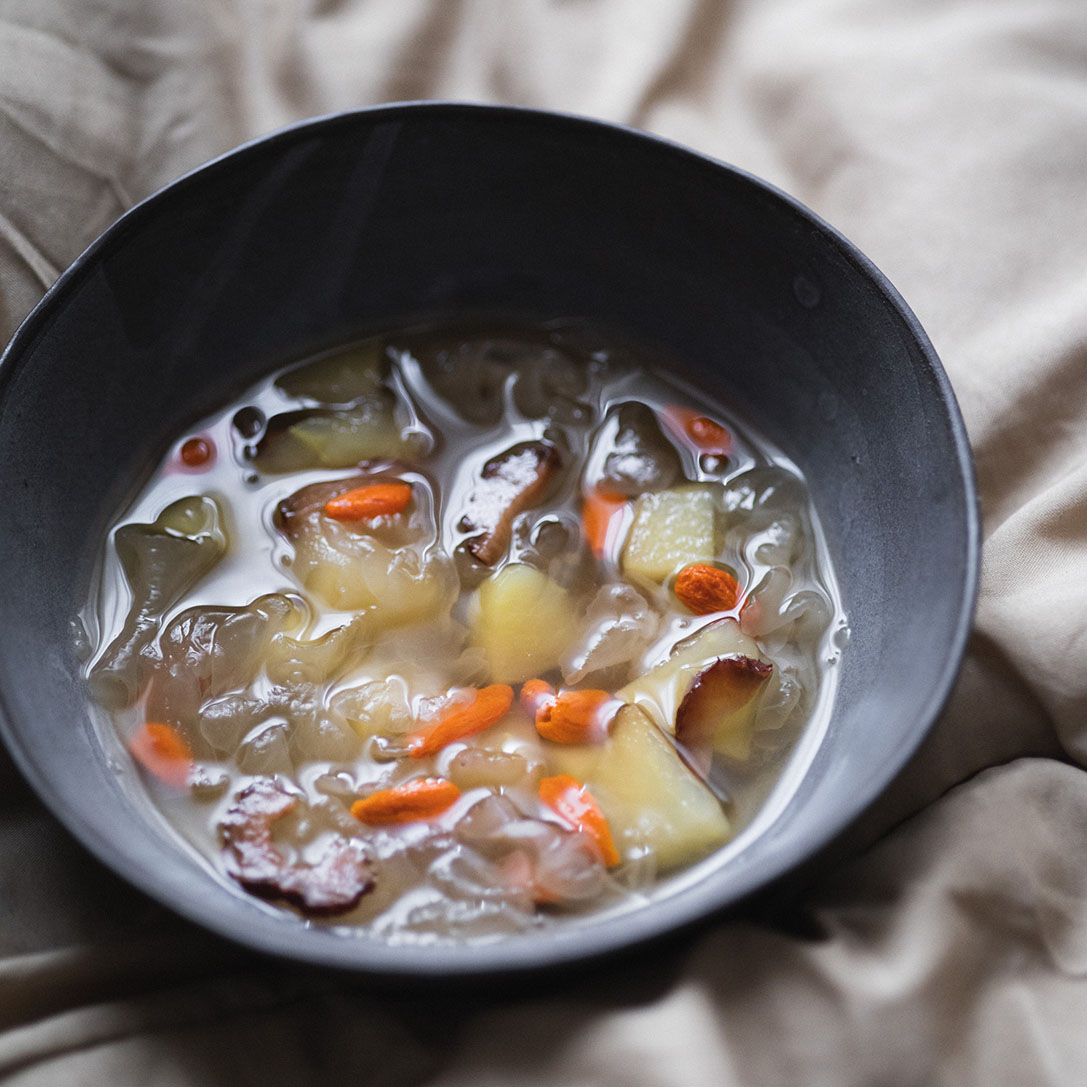
Snow Fungus Dessert Soup (Tong Sui)
I recently stumbled upon some dried tremella (snow fungus) at a local store, and had to use the opportunity to make a sweet snow fungus soup with jujubes and pears. My friend had just harvested all these autumn fruits from his orchard, so the timing was perfect.
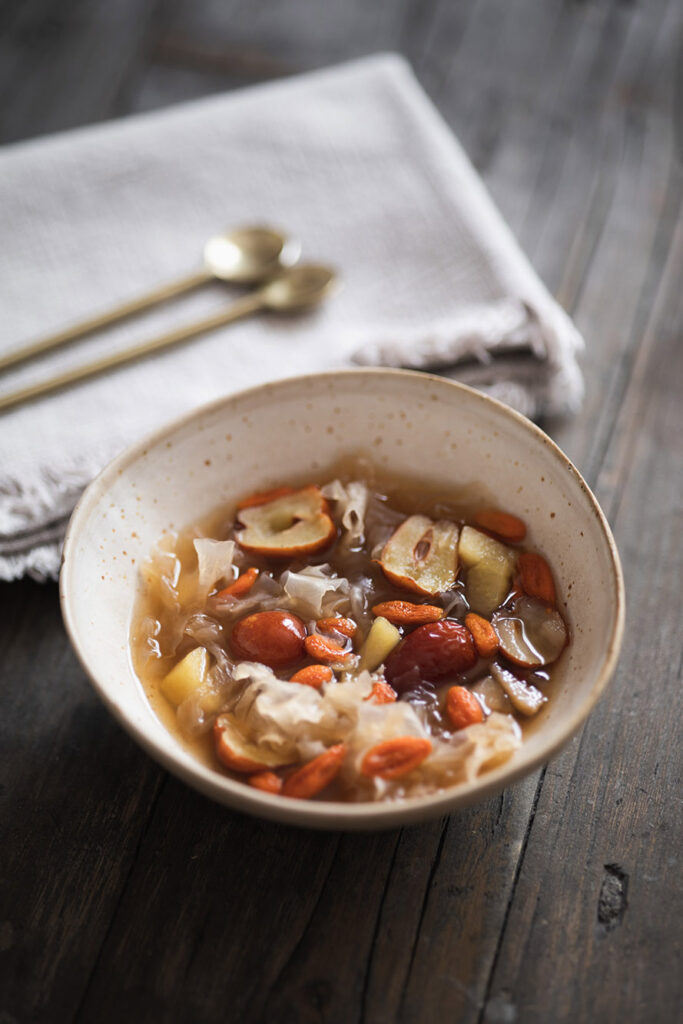
Tremella fuciformis, or snow fungus, is an edible mushroom species popular in Asian cuisine and traditional medicine. Also known as white fungus or snow mushroom, this gelatinous white mushroom has been traditionally used for its health benefits – especially for skin.
My snow fungus soup recipe is inspired by traditional Chinese recipes, but with a touch of local and seasonal magic that I have available in Croatia, where I live. Even though it’s called a “soup”, this is actually a sweet dish that is often eaten as a dessert. In fact, it’s very similar to the comforting fruit compotes that are popular in this part of Europe.
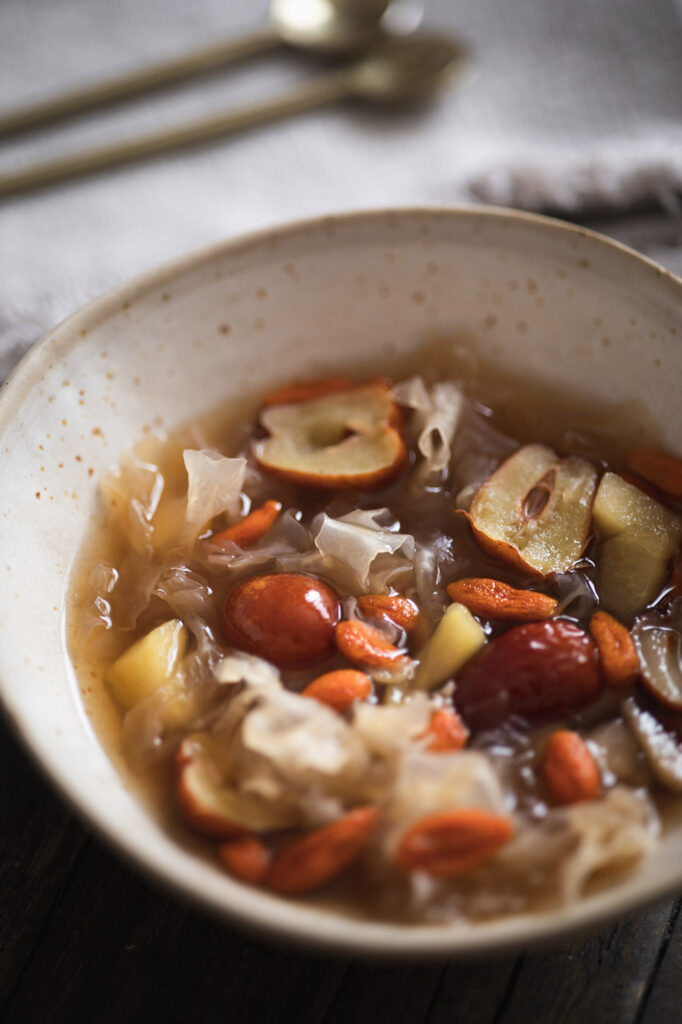
Snow fungus soup ingredients
To make this delicious sweet snow fungus soup, you’ll need the following ingredients:
- Snow fungus (a.k.a. Tremella mushroom or white fungus) – it’s typically sold dried.
- Jujubes – you can use fresh or dried. I used half-dried, homegrown jujube fruits from my friend’s garden, but commercially dried ones work beautifully, too. High-quality dried jujubes (such as the Jun variety from Xinjiang) will provide a lovely natural sweetness and depth of flavour to your snow fungus soup.
- Goji berries – another nutritious and tasty ingredient, they are often used for their immune-boosting properties, skin benefits and improving overall vitality. Choose organic ones whenever you can, as conventionally grown ones are known to be treated with pesticides.
- Pears, apples, or other seasonal fruit of choice. I opted for local heirloom pears because they were perfectly in season.
- Sweetener of choice (optional) – I sometimes enhance the sweetness with a touch of maple syrup, raw cane sugar, or honey. However, if your jujubes are sweet enough, you may not need any extra sweetener at all! Traditional recipes typically call for rock sugar.
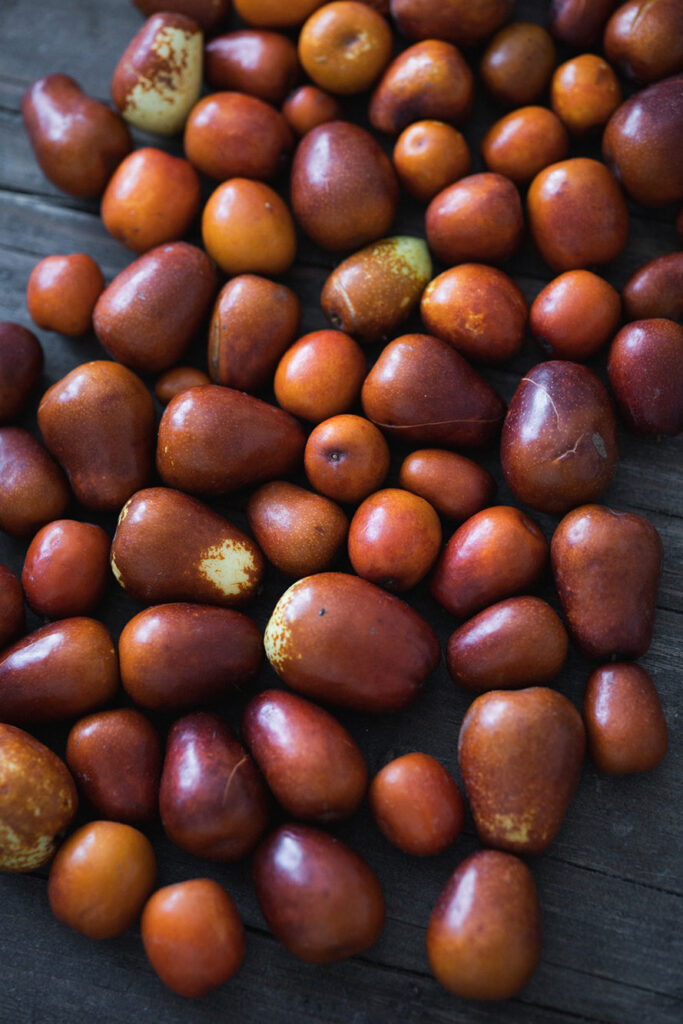
A note on tradition
Historically, various other ingredients have been included in different snow fungus soup recipes, such as lotus seeds, dried longan, lily bulbs, peach gum, or Chinese almonds. I like to make mine with ingredients that are sensible and available in my climate, but please feel free to incorporate any of these traditional elements if they make sense for you!
How to make snow fungus soup
Making this soup is actually very simple, but you do need to account for the time it takes to soak the fungus and let everything simmer on the stove. So, let’s start 🙂
1. Rehydrating the snow fungus
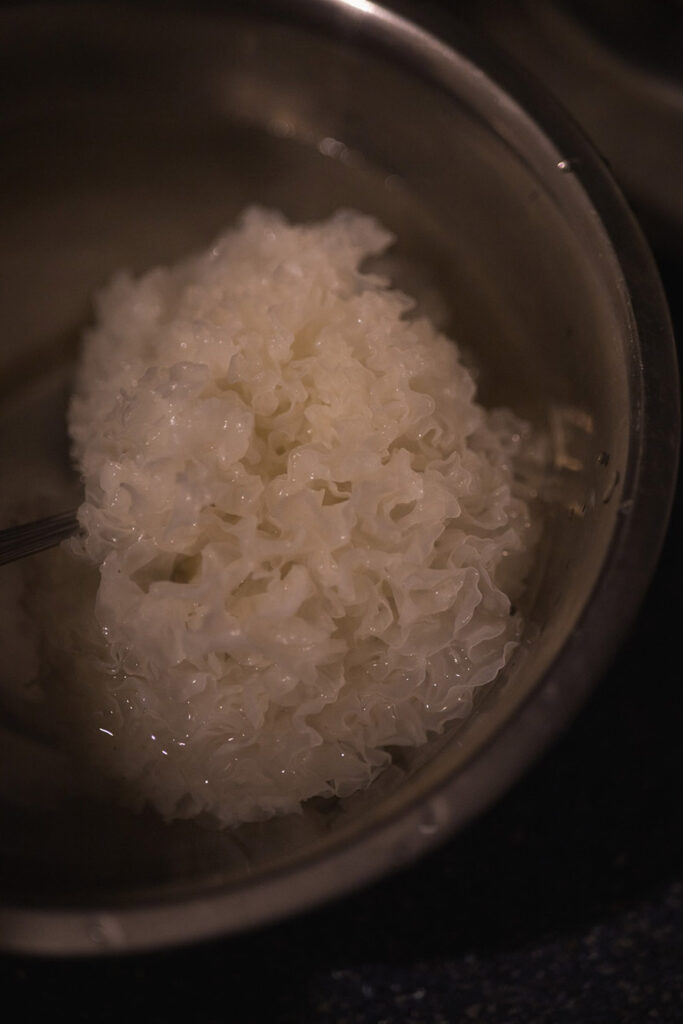
The first and most important step is to rehydrate the dried snow fungus. Take your dried piece of white fungus and place it in a large bowl. Cover it generously with cold or lukewarm water – not hot, as that can affect the texture. You’ll need to let it soak for about 30 to 60 minutes, or until it becomes soft, pliable, and expands dramatically (it will be several times its original size!). Once it’s fully rehydrated, drain the water, gently rinse the fungus, and use a pair of kitchen scissors to trim off the tough, hard yellow base where it was attached. Then, you can slice or tear the rest of the soft, white mushroom into smaller, bite-sized pieces.
2. Soaking the jujubes and other dried ingredients
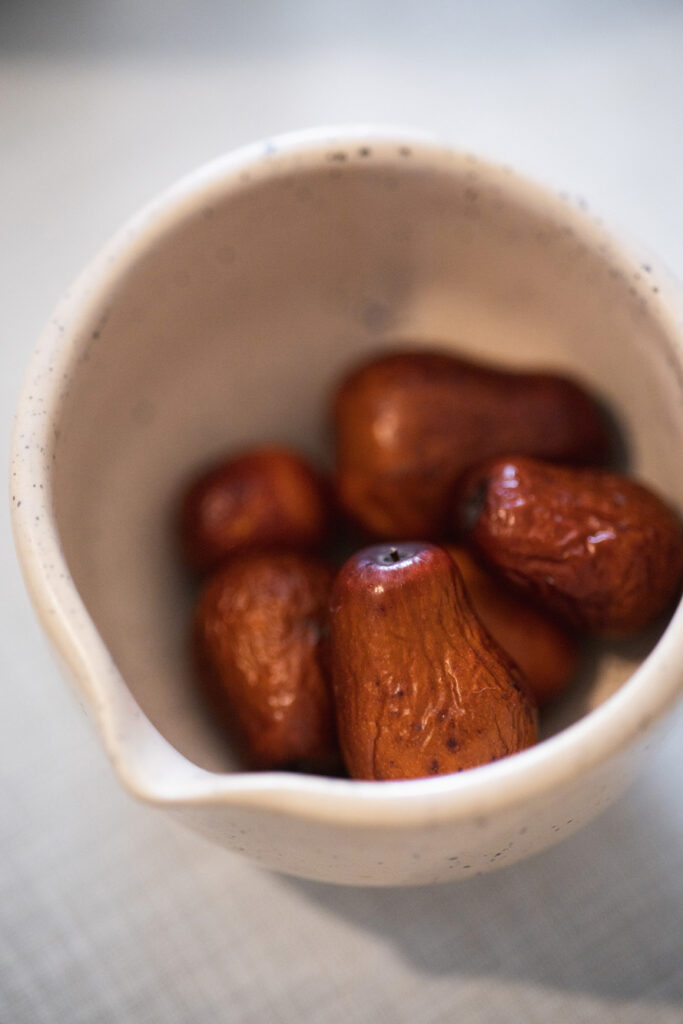
While the fungus is soaking, it’s a good time to prepare your other dried ingredients. Give your jujubes (if dried) and other dried fruit (if using) a quick rinse if needed, and then place them in separate small bowls to soak in a bit of fresh, cold water.
This helps to clean them and ensures they soften up nicely during the cooking process. The only dried fruit I don’t soak are goji berries, as they are quite tender already and will rehydrate quickly in the soup.
The soaking time for jujubes can also be 30-60 minutes, depending on how dry they are.
3. Cooking the snow fungus soup
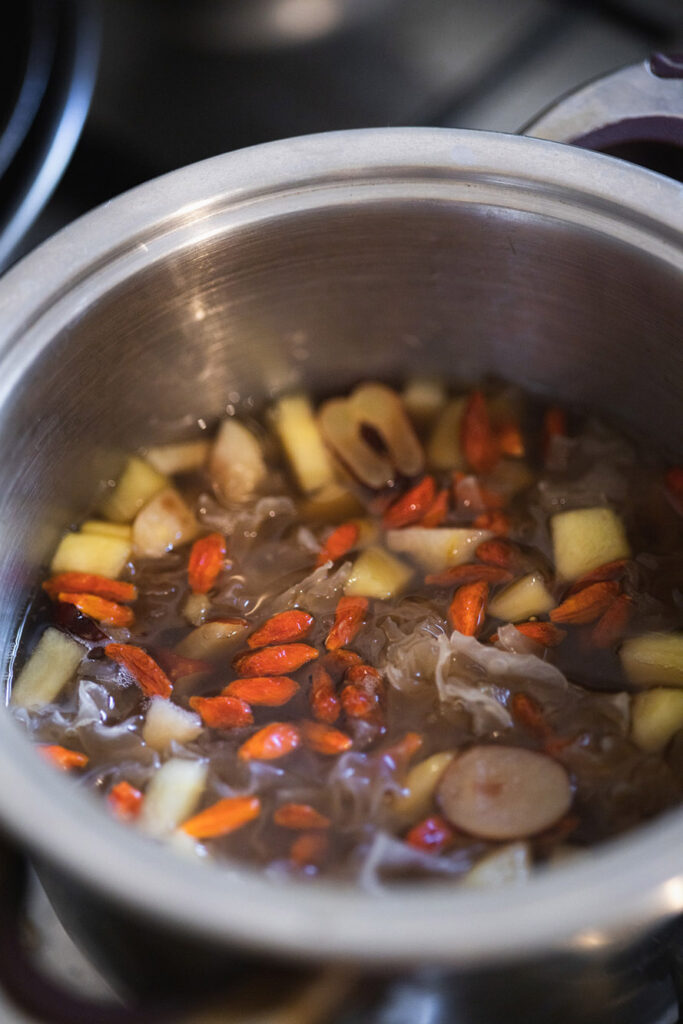
Now it’s time to bring everything together on the stove. Transfer your prepared snow fungus pieces, the soaked jujubes, and your chopped fresh fruit (like the pears I used) into a pot. Add enough fresh water to generously cover all the ingredients—about 4 to 6 cups, depending on how soupy you want the final dessert to be. Bring the mixture to a boil, and then immediately reduce the heat to a gentle simmer.
4. Achieving the perfect texture
This is where you decide on your preferred texture. For this recipe, I find that a quicker simmer of about 20 to 25 minutes is perfect. This duration allows the snow fungus to become tender while still retaining its cool and almost crunchy texture. It won’t be completely gooey or dissolved.
In many traditional recipes, people simmer the soup for 60 to 90 minutes to get a very soft, gelatinous, and thick consistency. If you prefer that “melty” texture, feel free to cook it longer, but for me, 20 minutes is just right. Just keep an eye on the water level so it doesn’t dry out.
5. Final sweetness and finish
In the last 1-2 minutes of simmering, stir in your goji berries. Don’t cook them for longer than this because they are quite gentle and can overcook easily. Overcooking could make their acidity take over the flavour of the soup.
Add any optional sweetener you choose to use (like raw sugar or maple syrup). If you use honey, add it after removing the soup from the heat and letting it cool down a little (so as not to destroy the honey with heat).
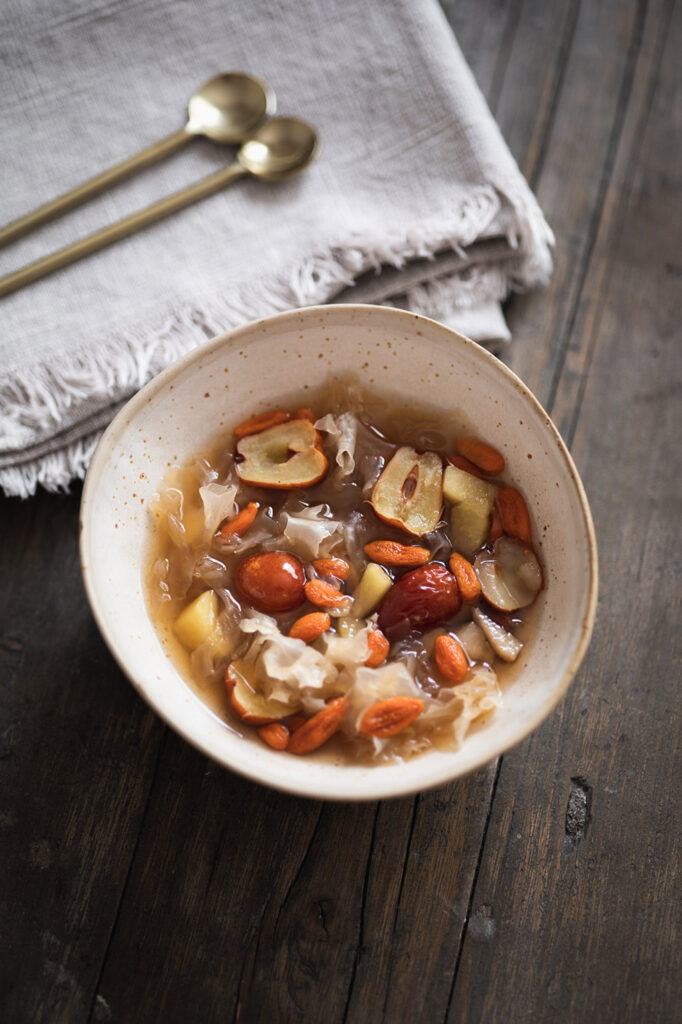
Remember, the jujubes already contribute a lovely natural sweetness, so taste it first! Once the snow fungus has the perfect, delicate, soft texture, turn off the heat. This dessert can be enjoyed warm or chilled, and I find that the flavours develop beautifully if you let it rest for an hour or so before serving.
Storing the snow fungus soup
If you have leftovers, store the soup in an airtight container or a glass jar in the fridge. It will stay fresh for about 3 to 4 days. Because of the nature of the snow fungus, you might notice the liquid thickening slightly as it sits, which is normal.
I personally think it tastes excellent cold directly from the fridge, especially in warmer weather. If you prefer it warm, you can just reheat it gently on the stove for a few minutes (low heat). I wouldn’t recommend freezing it, as the texture of the pears and the fungus can become a bit mushy once thawed.
Snow fungus soup recipe – kitchen equipment
Essential prep tools
- Large glass mixing bowls: you’ll need these for soaking the dried fungus. I recommend glass because it’s non-reactive and you can easily see when the mushroom has fully “bloomed.”
- Kitchen shears: these are a lifesaver for trimming away the tough, yellow “root” of the fungus and quickly snipping it into bite-sized pieces without needing a cutting board for every step.
- Fine mesh strainer: for rinsing the dried fruits before they go into the pot.
- A sharp chef’s knife or paring knife: for chopping your pears, jujubes and other fruits.
- A solid cutting board (I usually prefer wood).
Cooking options
- Stainless steel stockpot (3-5 Quart): a standard, high-quality pot with a thick base is perfect for the 20-minute simmer. Look for one with a glass lid so you can monitor the water level without letting the steam out.
- Glass simmer pot: I’ve seen many people using these clear, heat-resistant glass pots lately and I just love how they look. I haven’t picked one up for myself yet, so please feel free to live out my glass pot dreams for me. It allows you to see all those beautiful layers of pears, jujubes, and fungus while they simmer.
- Clay pot: for those who do want that 90-minute melty texture, a small ceramic slow cooker is the traditional way to go (I’d choose a glazed one since it doesn’t absorb flavour and can be used for different things).
Serving & storage
- Glass storage jars (Weck or Mason jars): since this soup is like a compote, it looks and keeps best in glass jars in the fridge. They’re my favourite for storing.
- Deep soup ladle: look for a stainless steel or silicone ladle with a deep bowl to ensure you get a good mix of fruit, fungus and broth in every serving.
- Ceramic soup spoons: To keep the authentic feel, look for Chinese-style ceramic spoons. They are perfect for scooping up the larger pieces of pear and fungus.
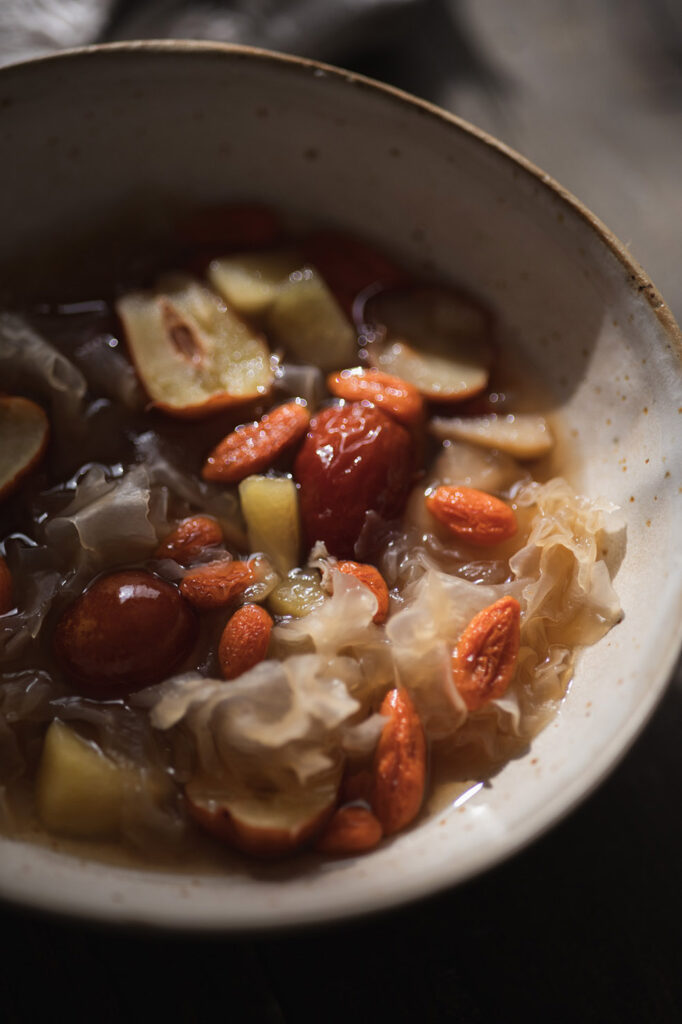
There is something super satisfying about taking a traditional Chinese cuisine ingredient like snow fungus and pairing it with heirloom pears and jujubes grown right here in Croatia. Good food doesn’t have to be complicated; it’s just about respecting the ingredients and finding a rhythm that works for your own kitchen.
Whether you’re eating this for its skin-boosting benefits or simply because you want a light, comforting dessert, I hope this soup brings a bit of that autumn orchard magic to your home.
Snow Fungus Dessert Soup (Tong Sui)
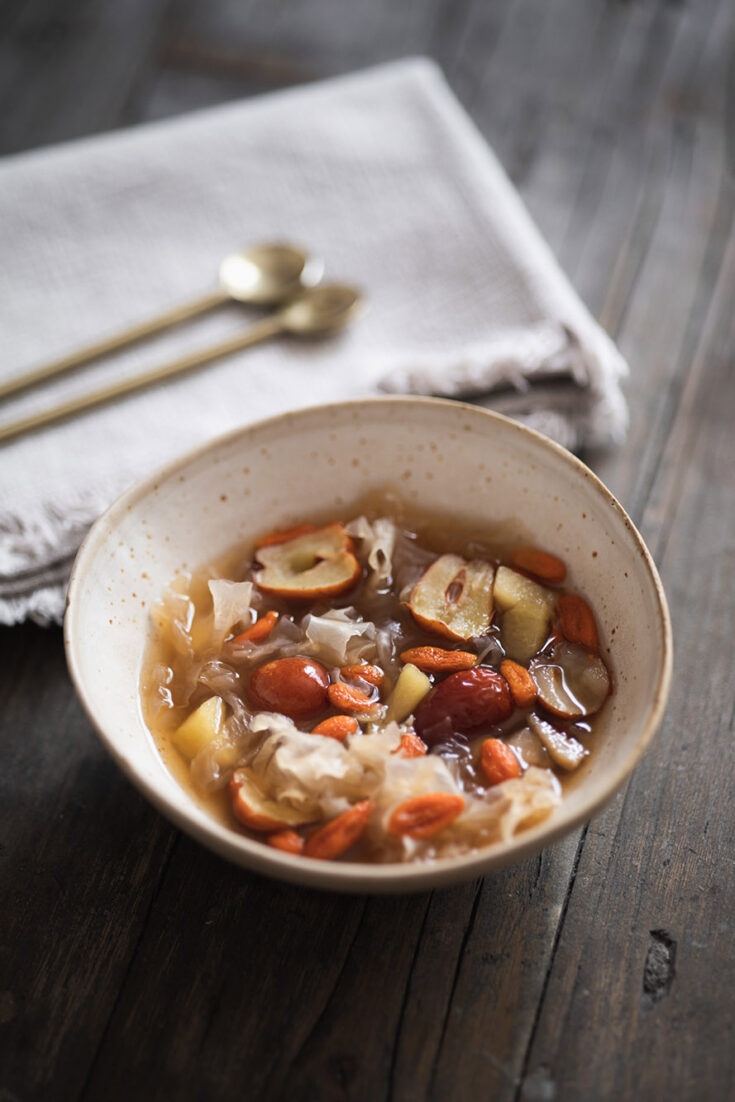
This is my favourite sweet snow fungus (Tremella mushroom) soup with pears and jujubes. A simple recipe inspired by tradition but made with local ingredients from Croatia.
Ingredients
- 1 large dried snow fungus (Tremella mushroom) piece, approx. 15-20 grams dried fungus.
- 6–8 jujubes (fresh or dried)
- 2 tbsp goji berries
- 1–2 firm pears or apples, cored and sliced
- 4–6 cups water (adjust based on how much broth you like)
- Sweetener to taste (optional: maple syrup, raw cane sugar or honey)
Instructions
- Place the dried snow fungus in a bowl and cover with cold or lukewarm water to rehydrate. Let it soak for 30 to 60 minutes until it is soft and expanded.
- Once rehydrated, trim away the hard yellow "root" at the base with scissors. Tear or slice the white fronds into bite-sized pieces.
- Rinse the jujubes and soak them in a bowl of cold water for 30 to 60 minutes to soften. There is no need to soak the goji berries; keep them dry for now so they don't become mushy.
- Add the prepared snow fungus, soaked jujubes and sliced pears to your pot. Pour in the water and bring to a boil. Immediately turn the heat down to low.
- Cook for texture: for a slight "crunch" (my favorite), simmer for 20–25 minutes. For a gelatinous texture, simmer for 60–90 minutes, adding more water as needed if the mixture becomes too thick.
- In the final 1–2 minutes of cooking, stir in the goji berries. Adding them late prevents them from turning the soup sour.
- Taste the broth first (jujubes are naturally sweet!). Stir in maple syrup or sugar if desired. If using honey, wait until the soup has cooled down slightly before stirring it in to preserve its benefits.
- Enjoy it warm from the stove or chilled directly from the fridge.
- To Store: keep in an airtight glass jar in the fridge for 3–4 days. Do not freeze, as the texture of the fungus and fruit will change.
Notes
If you use other dried fruits such as longan, you can prep them the same way as your jujubes; just rehydrate them for an hour in room-temperature water.
When buying goji berries, always opt for organic ones, as the conventionally grown ones can be full of chemicals.
If you’re buying dried jujubes at a store or online, look for Jun jujubes (often labelled as "Grade One" or "Xinjiang Junzao"). They are large and very sweet, usually the best option for sweet soups.
Be careful not to get candied jujubes; search for naturally dried ones.
Snow fungus sweet soup can be made with different ingredients, so feel free to choose yours: lotus seeds, dried longan, lily bulbs, and peach gum will all work really well. I chose pears this time around because I had some beautiful, locally grown ones.